01 The Chemical Foundations of Biochemistry
Outline
- General chemical principles
- Fundamental concepts of organic chemistry
- The chemistry of water
Learning Objectives
- Apply the basic principles of thermodynamics, equilibrium, and kinetics to biological systems.
- Describe biological molecules and processes using the tools of organic chemistry.
- Perform basic calculations pertaining to the chemistry of water and aqueous systems.
Section 1.1 Learning Objective
Apply the basic principles of thermodynamics, equilibrium, and kinetics to biological systems.
Thermodynamics Defined
Thermodynamics is the study of energy.
It can provide information about how and why a reaction can occur.
It can also provide information about the conditions required for a reaction to occur.
First Law of Thermodynamics
Energy is conserved.
It cannot be created or destroyed but only converted from one form to another.
Forms of energy
- Kinetic
- Potential
- Heat
- Chemical
Second Law of Thermodynamics
The entropy of the universe (S) is always increasing.
The entropy of a system increases in disorder and randomness.
Third Law of Thermodynamics
The entropy of a perfect crystalline system at 0 K is 0.
Gibbs Free Energy
ΔG = ΔH − TΔS
H = enthalpy
T = temperature (in K)
S = entropy
Delta G does not predict reaction rate
Forward direction = favorable (spontaneous)
Reverse direction = non favorable (non spontaneous)
Reaction Spontaneity
| ΔH | ΔS | ΔG | Comments |
|---|---|---|---|
| − | + | − | Always spontaneous |
| + | + | + or − | Spontaneous at high temperatures |
| − | − | + or − | Spontaneous at low temperatures |
| + | − | + | Never spontaneous |
Standard Free Energy State, ΔG°
Free energy at standard state conditions:
- T = 298K
- P = 1 atm
- [solutes] = 1 M
- pH = 7.0
This can affect overall free energy
For the reaction: - a A + b B → c C + d D
- ΔG = ΔG° + RT ln ([C]c[D]d/[A]a[B]b)
ATP Hydrolysis
Figure 1.2 Hydrolysis of ATP.
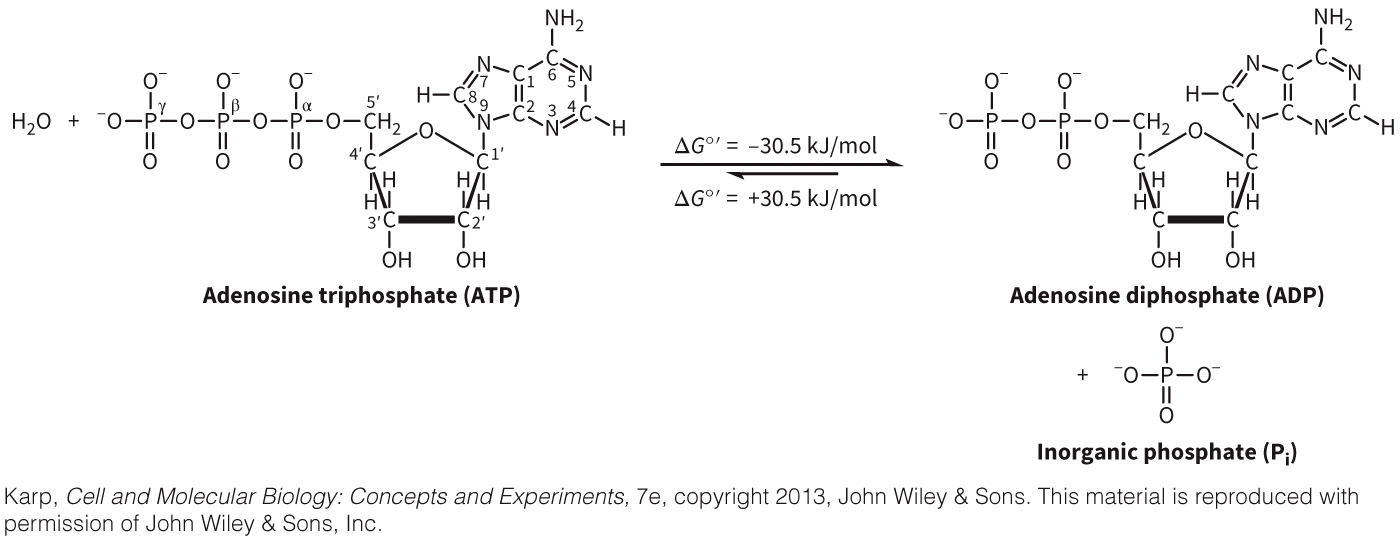
ATP Hydrolysis
ATP hydrolysis has a large ΔG.
This reaction can be used to drive reactions forward.
Coupling Reactions
A process in which unfavorable reactions can be made energetically possible by linking them to favorable ones
Coupling Reactions
Figure 1.4 Coupling favorable and unfavorable reactions.

Equilibrium Defined
Equilibrium is the chemical state when the rate of the forward and reverse state of a reaction are equal.
Concentrations of reactants and products do not need to be the same.
Le Châtelier’s principle states that all reactions seek to move toward equilibrium.
Equilibrium Can Relate to Free Energy
For the reaction, a A + b B → c C + d D
Keq = equilibrium constant
Keq = [C]c[D]d/[A]a[B]b
ΔG = ΔG° + RT ln ([C]c[D]d/[A]a[B]b)
Since ΔG at equilibrium = 0, ΔG° = −RT ln Keq
Keq = e−ΔG°/RT
Kinetics Defined
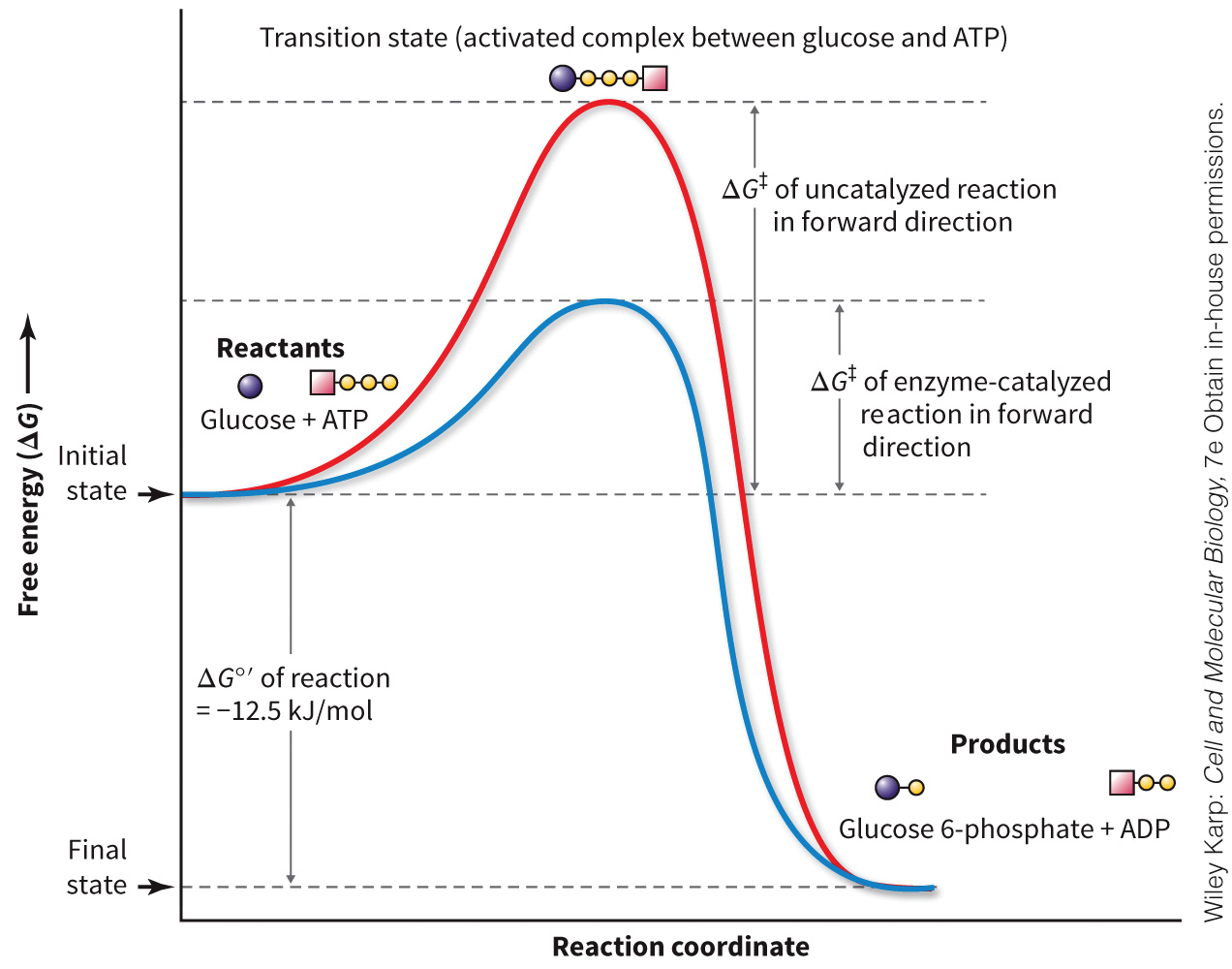
Kinetics is the field of study that analyzes the rates of chemical reactions.
It can involve single or multiple reactants to make single or multiple products.
It depends on [products] and [reactants], temperature, and factors specific to that individual reaction.
Graphical Interpretation of Kinetics
Figure 1.5A Reaction coordinates and catalysis.
Rate Law Defined
Rate law is the rate of any chemical reaction that can be described using a mathematical expression.
- A + B → C
- Rate = d[C]/dt = k[A][B]
Catalyst Defined
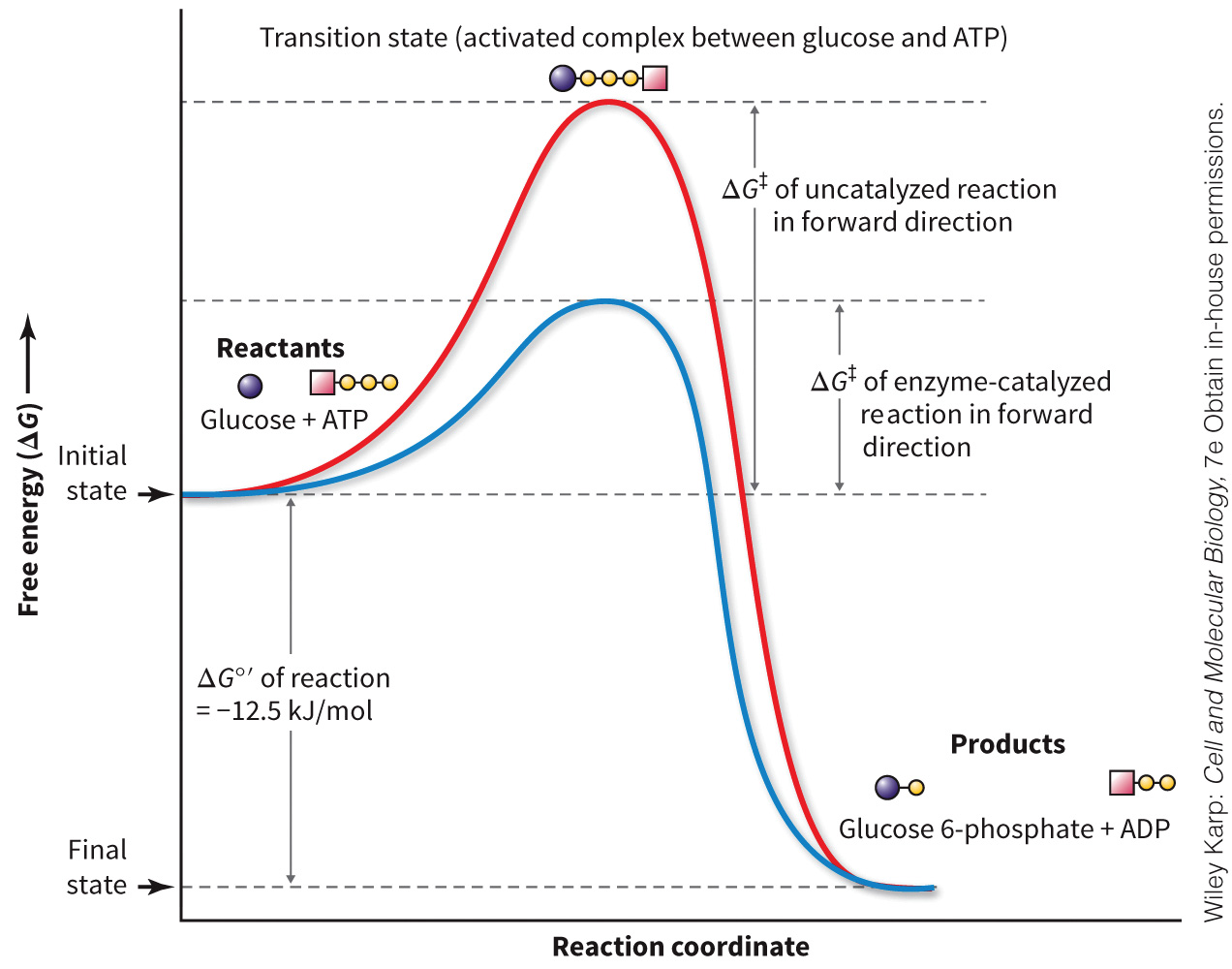
Catalyst is a biological enzyme that speeds up a reaction by lowering the activation energy.
It helps a system reach equilibrium more quickly.
It does not affect ΔG, the equilibrium [reactants] or [products].
Energy Diagrams for Catalyzed Reactions
Figure 1.5A Reaction coordinates and catalysis.
Section 1.2 Learning Objective
Describe biological molecules and processes using the tools of organic chemistry.
Functional Groups Defined
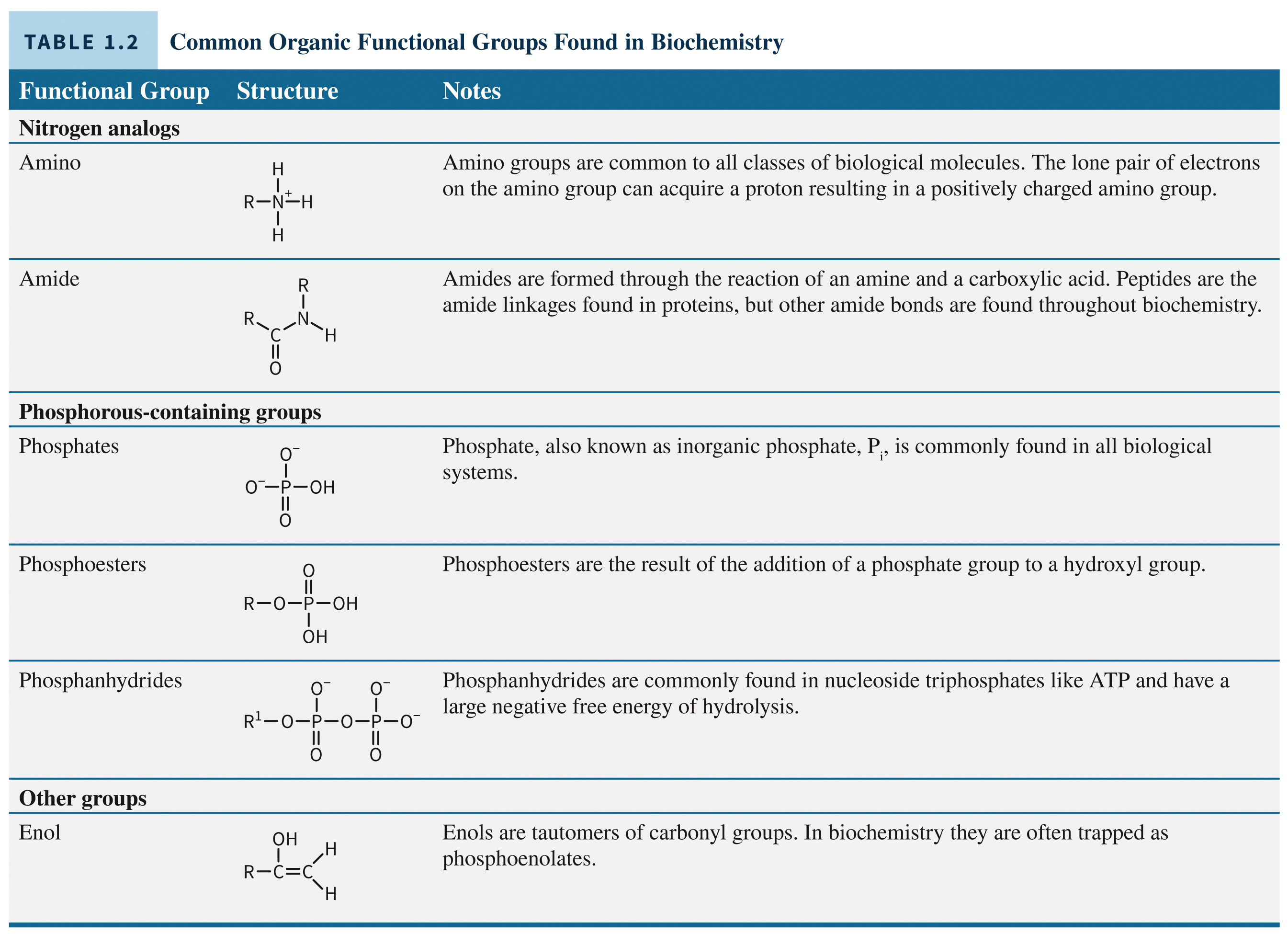
Functional groups are fragments of a molecule, such as a hydroxyl or carbonyl group.
Common Functional Groups
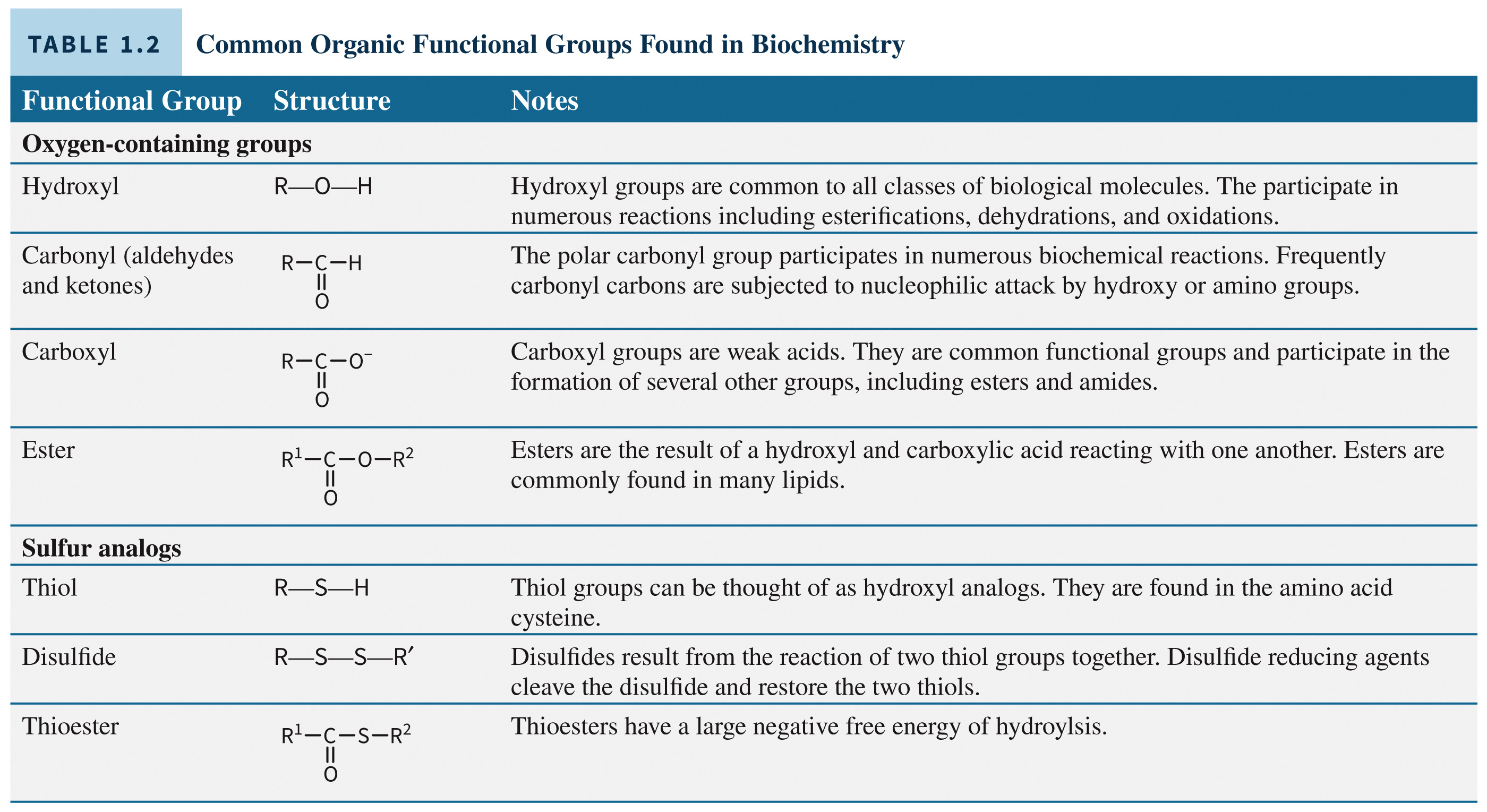
Common Functional Groups
Solubility and Polarity
Biochemistry occurs in aqueous systems.
Water is a common solvent in the body.
Molecules can be made more water soluble by adding more polar groups.
OH and NH2 groups are polar (can form hydrogen bonds)
Hydrophobic (nonpolar) molecules.
Reaction Mechanism Defined
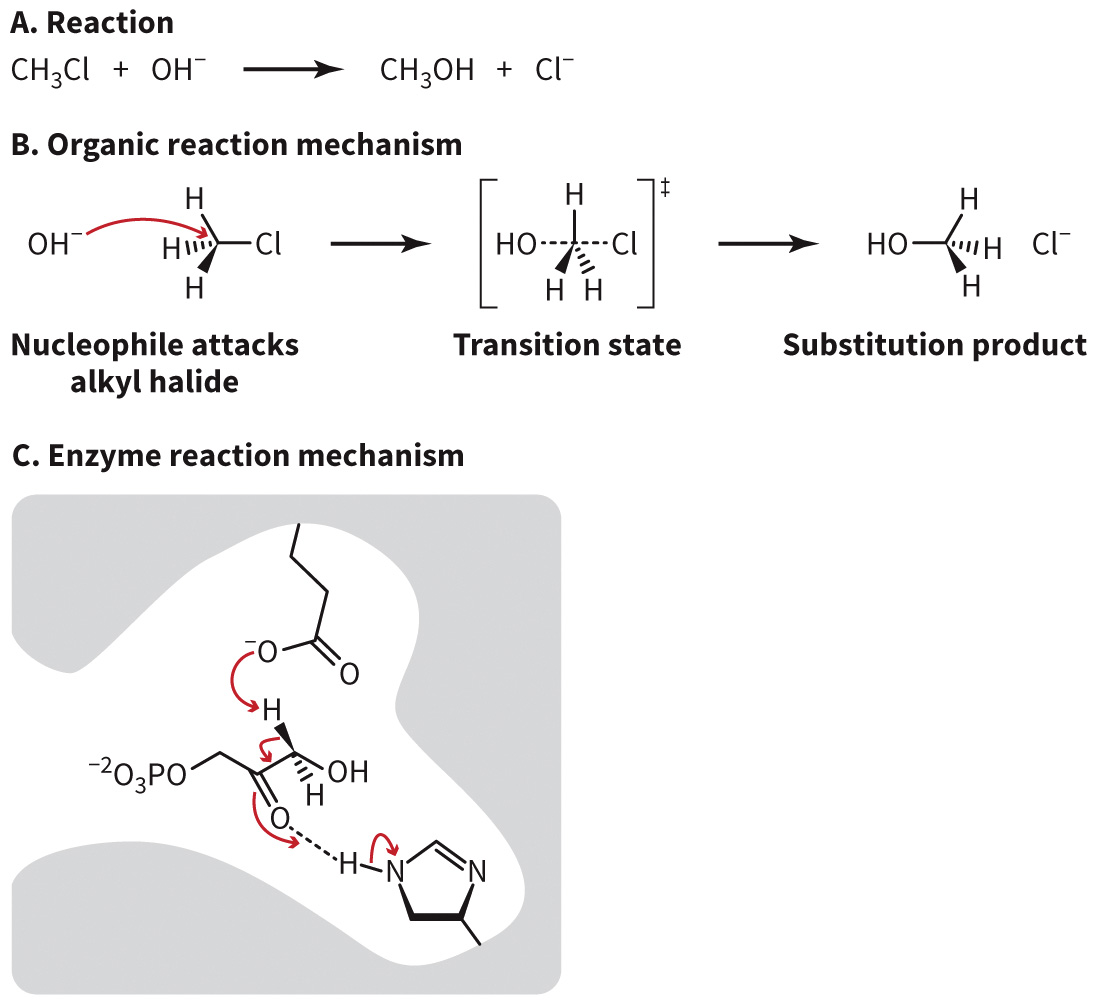
Reaction mechanism explains the making and breaking of bonds at the molecular level.
Reaction arrows indicate the direction of the reaction (electron flow).
Reaction Mechanisms
Figure 1.7 Reaction mechanisms.
Polymers Defined
Polymers are macromolecular assemblies of smaller building blocks (monomers).
They can be connected in a linear or branched fashion.
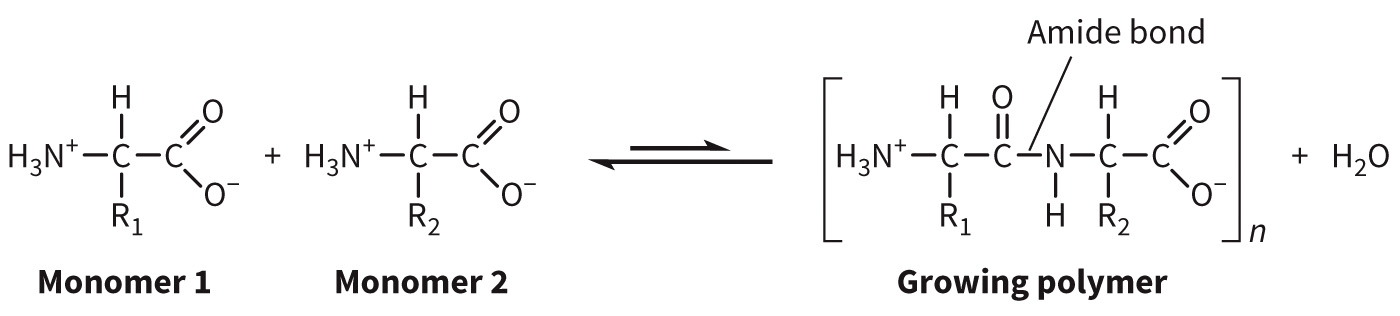
Examples include: DNA, RNA, proteins, enzymes, glycogen, starch and cellulose
Section 1.3 Learning Objective
Perform basic calculations pertaining to the chemistry of water and aqueous systems.
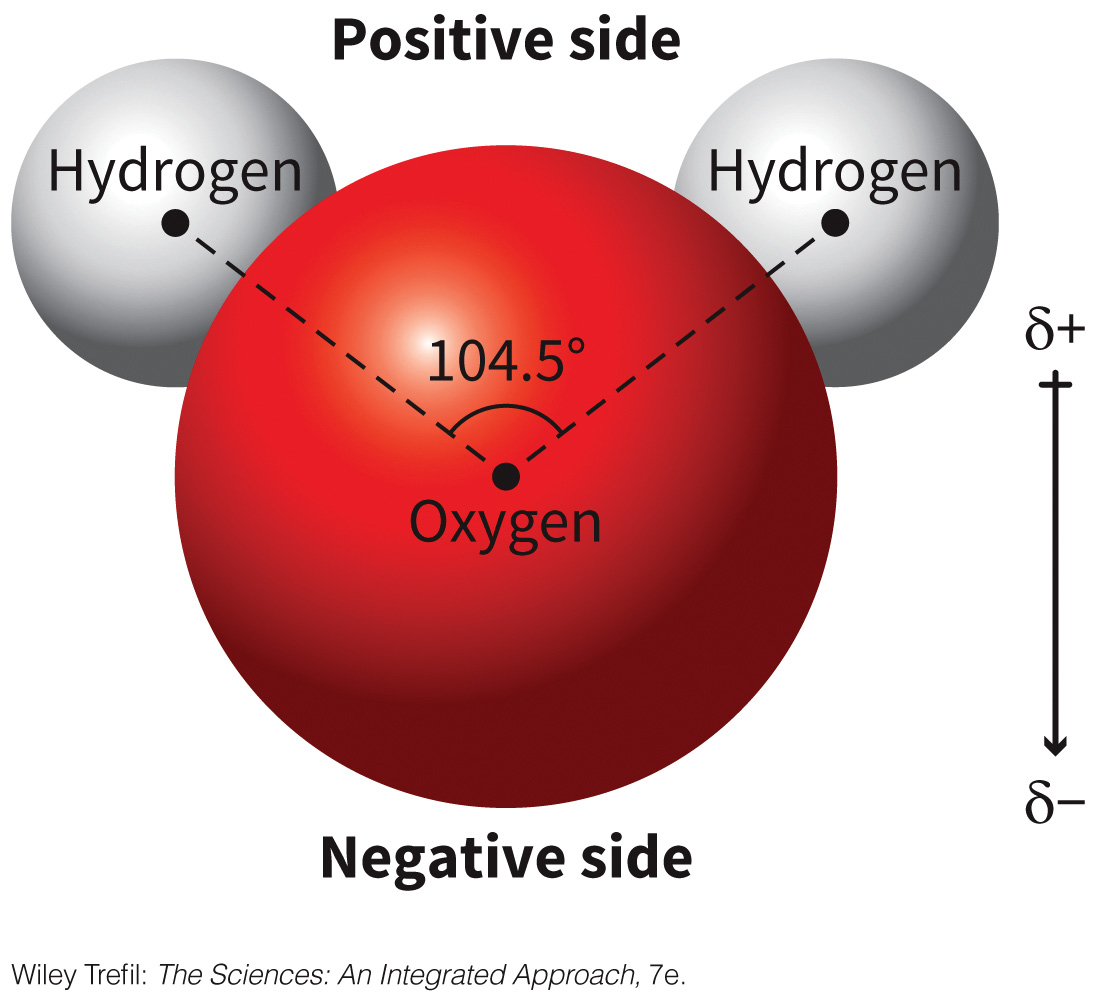
Water, a Polar Molecule
Figure 1.8A Structure of water.
Hydrogen Bonding at Work
Figure 1.10 Hydrogen bonding.
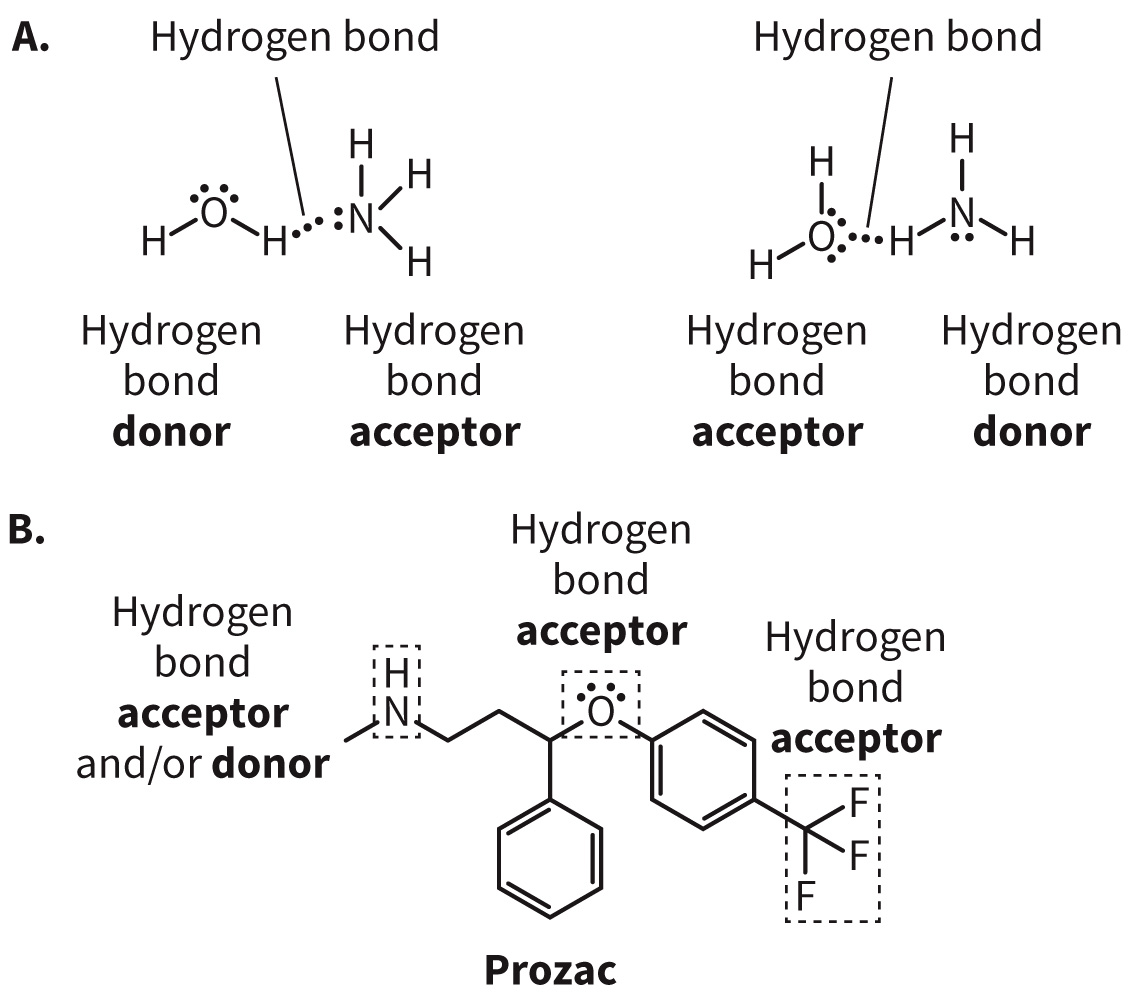
Discuss electronegativity between O and H.
Hydrogen Bonding at Work
A weak force compared with a covalent bond
Forms double helix of DNA
Electronegativity between O and H.
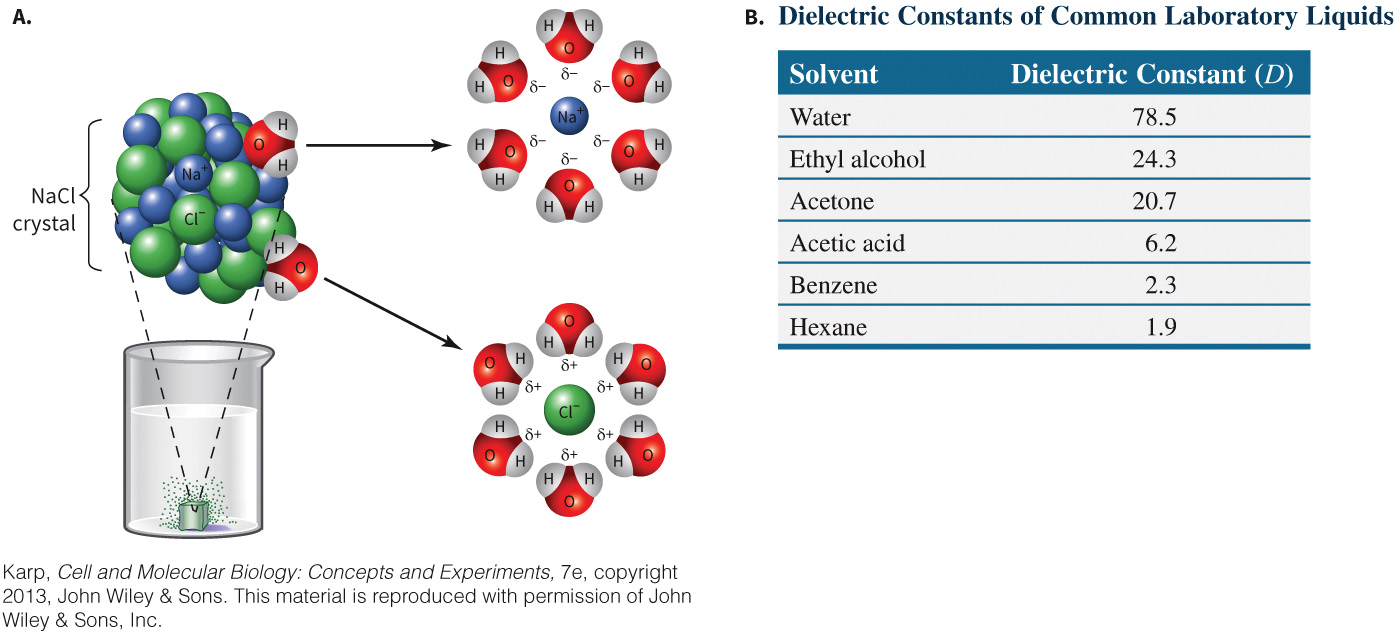
Water’s Polarity Influences the Strength of Ionic Interactions
The polarity of a solvent has to be categorized by the dielectric constant.
The high dielectric constant means that it can readily solubilize many ionic solids and significantly decrease ionic interactions.
Dielectric Constant
Figure 1.9 Coulombic interactions.
Acids and Bases
Arrhenius
- Acids: H+ donors
- Bases: generate OH–
Brønsted-Lowry - Acids: H+ donors
- Bases: H+ acceptors
pKa, a Measure of Acid Strength
Ka, the acid ionization constant
Measures the acidity of a proton
Ka = [H+] [A−]/[HA]
Strong acids have high Ka values because they fully dissociate in water
pKa = −log Ka
where H+ is the proton concentration; A– is the conjugate base of the acid, and [HA]is the concentration of the acid at equilibrium (in M)
The higher the pKa, the less acidic the proton.
pH, a Measure of Acidity
pH measures acidity
This is an important factor in all biochemical reactions
pH = −log[H+]
pH scale is in the range 0–14
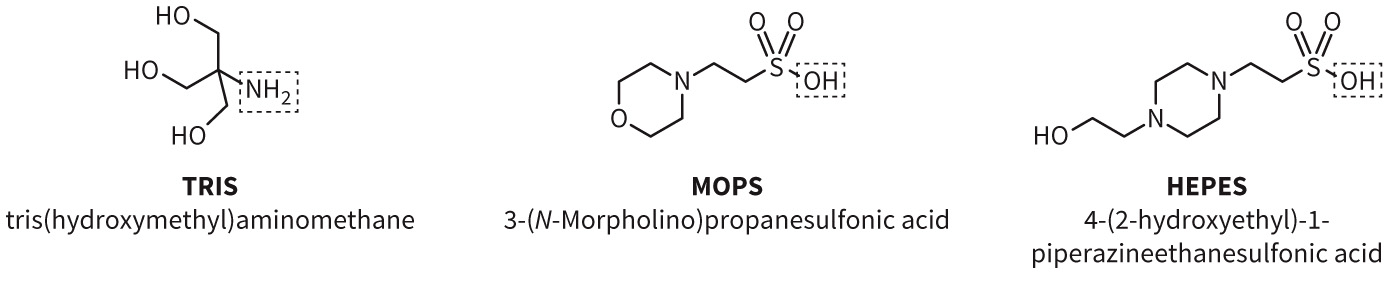
Buffers Defined
Buffers are chemical systems resistant to changes in pH
Mixtures of weak acids and their conjugate bases
Henderson–Hasselbalch Equation
An expression used to calculate the pH of a buffer system
pH = pKa + log[A−]/[HA]
pKa = pKa of the weak acid, [A–] is the molar concentration of the conjugate base of the weak acid and [HA] is the concentration of the un-ionized weak acid, also expressed in units of molarity, M
Buffering Capacity Defined
Buffering capacity is the pH at which a weak acid or conjugate base system will buffer.
This is a function of its pKa, but the total amount of acid or base that can be consumed is a function of the concentration.
Bicarbonate buffer in blood/introduction to acidosis and alkalosis